
2026 Agency Platform Pricing Comparison: Vendasta, Birdeye, Podium, Grade.us, Synup, BrightLocal
ProfilePilot Team | Apr 22, 2026 | 9 min read
A structure-first pricing comparison to help agencies avoid hidden platform taxes, seat traps, and lock-in mechanics.
How to Compare Platforms Correctly
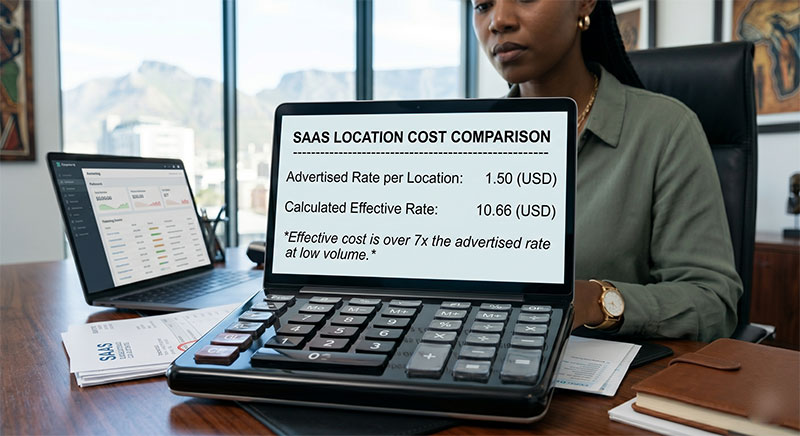
When scaling a digital marketing agency, most financial losses do not stem from missing software features; they originate from extractive pricing architectures. The industry’s pervasive reliance on hidden dashboard taxes—manifested through forced multi-tier upgrades, hidden white-label premiums, and punishing seat minimums—functions as an aggressive penalty on your agency's growth.
When conducting a comprehensive white-label reputation management software comparison for 2026, analysts frequently observe that platform providers utilize highly sophisticated, opaque billing structures to obscure the Total Cost of Ownership (TCO) for their white-label partners.
Here is a structure-first pricing comparison of legacy reputation platforms to help your agency avoid hidden platform taxes, seat traps, and lock-in mechanics.
How to Compare Platforms Correctly
A common procurement mistake is trusting the headline rate while ignoring mandatory baseline fees. Before committing to a vendor, you must calculate the true unit economics of the platform.
Always evaluate platforms across these five mandatory metrics:
-
Fixed Baseline Cost: The mandatory monthly fee charged simply to access the administrative dashboard.
- Effective Cost at Current Location Volume: The total monthly cost divided by your current number of client locations.
- Seat Floors and Overages: Minimum user requirements or expensive fees for adding team members.
- Contract and Renewal Mechanics: Strict 12-month lock-ins that prevent agile migrations.
- White-Label Fee Separation: Hidden annual surcharges required to activate custom domains and SSL certificates.
Common Pricing Patterns in the Market (2026 Breakdown)
Across major vendors, distinct architectural patterns dictate how you will be billed. These models can work for massive enterprise operators managing hundreds of locations, but they severely compress profit margins for growth-stage agencies.
1. The Offset Marketplace Matrix: Vendasta
Vendasta positions itself as a complete operational ecosystem, utilizing a complex "spend-to-offset" calculation.
-
The Baseline Trap: The Professional tier, generally considered the baseline for a growing agency, subjects you to a strict 12-month contract featuring a $499 monthly minimum commitment.
-
The Mechanics: Every dollar spent on qualifying wholesale marketplace products reduces the base platform fee. However, if your agency does not organically need $499 worth of marketplace products, you are contractually obligated to pay the remainder as a pure dashboard fee.
- Hidden Frictions: The platform allocates only 5 team member seats, charging $30 to $65 for each additional user. Furthermore, core reporting features like the Snapshot Report are capped at 25 per month, with a $2 charge for every subsequent report. Onboarding fees routinely range from $500 to $2,500.
2. The Direct-to-Enterprise Multipliers: Birdeye and Podium
Platforms like Birdeye and Podium possess formidable brand recognition but are fundamentally engineered for direct-to-business enterprise sales, completely abandoning wholesale pricing.
- Retail Multipliers: Birdeye’s pricing framework ranges from $299 to $499 per location, per month. Podium’s Core plan begins at $399 per month, reaching $599 per month for a single location on the Pro plan.
- Agency Impact: Managing a portfolio of 50 client locations yields an astronomical annual software COGS ranging from $209,400 to nearly $299,400. To access any white-label capabilities on Birdeye, an agency is forced into enterprise-level plans exceeding $499 per month, bound by rigid annual contracts and setup fees.
3. The Seat Quota and Premium White-Label Tax: Grade.us
Grade.us explicitly targets marketing agencies and avoids retail location multipliers, but establishes high financial floors through minimum user requirements.
- Seat Minimums: While offering a base "Agency" tier at a seemingly reasonable $40 per seat, Grade.us strictly enforces a 10-seat minimum, instantly creating a $400 monthly baseline.
- The White-Label Tax: To unlock Premium White Label capabilities—including a custom domain and dedicated SSL certificate—agencies must pay an additional $440 annual fee.
4. The Tiered Infrastructure Cap: BrightLocal and Synup
These platforms attempt to bridge the gap between retail and wholesale by employing tiered location buckets.
- BrightLocal: Prices its "Grow" tier linearly based on location volume. Scaling to 11-20 locations costs $179 per month, expanding to 41-50 locations reaches $449 per month, and 91-100 locations escalates to $899 per month. While more accessible than retail multipliers, costs increase in large, rigid increments.
- Synup: Provides excellent deep white-labeling via its "Synup OS" product architecture, but its pricing remains heavily tiered. The Agency OS tier commands $249 per month, and the enterprise Scale tier jumps drastically to $799 to $999 per month.
What to Do Next
The architecture data strongly indicates that the legacy "Per Location" illusion is operationally obsolete. Do not accept opaque software billing or arbitrary seat quotas that continuously fracture your feature set. Before signing any annual contract, build a three-scenario financial model (conservative, target, aggressive) to project exactly what your software COGS will be as you acquire new clients.
-
To understand the core unit math behind these hidden fees, review The Per-Location Illusion.
-
If you run or plan to run teams in emerging markets, continue with The ZAR 5,000 Barrier
-
To calculate your own monthly and annual margin uplift using a predictable, regressive pricing curve, use ProfilePilot Partners
Keep learning
See the latest guides, experiments, and rollouts.